ONGOING PROJECTS
Fighting Tomorrow’s Droughts Today? Anticipated Agricultural Decline, Climate Stress, and Conflict
Ref: ReCIPE_LOA_0313
IP: Laura Mayoral
The Centre for Economic Policy Research (CEPR),UK
2025-2026
Climate change threatens two pillars of the 2030 Agenda—ending hunger and building peaceful, inclusive societies. While extensive evidence shows that short-lived shocks like droughts, floods, and heatwaves heighten risks of riots, communal clashes, and civil war, a slower channel remains underexplored: conflict that arises because communities anticipate, or already endure, the gradual decline in agricultural productivity from long-run warming and shifting rainfall. Our project targets this pathway by focusing on long-run changes in agricultural productivity. We will quantify whether and where slow-onset agricultural decline elevates the risk of social unrest and organized violence after separating it from short-run weather shocks, identify mechanisms and contexts that amplify or mute this link and translate the findings into practical early-warning and planning tools to target adaptation and peacebuilding where they matter most.
The project will deliver an open-access, harmonised global cell-year panel linking climate-driven yield pressure to conflict since 1990; high-resolution “adaptation-pressure” maps under multiple climate scenarios for 2020, 2050, and 2070; and an empirical analysis that will examine the links between civil unrest and adaptation pressured under different climate scenarios and time horizons.

Harmonising and Enhancing Conflict Event Data
Ref: ReCIPE_LOA_0315
IP: Hannes Mueller
The Centre for Economic Policy Research (CEPR),UK
2025-2026
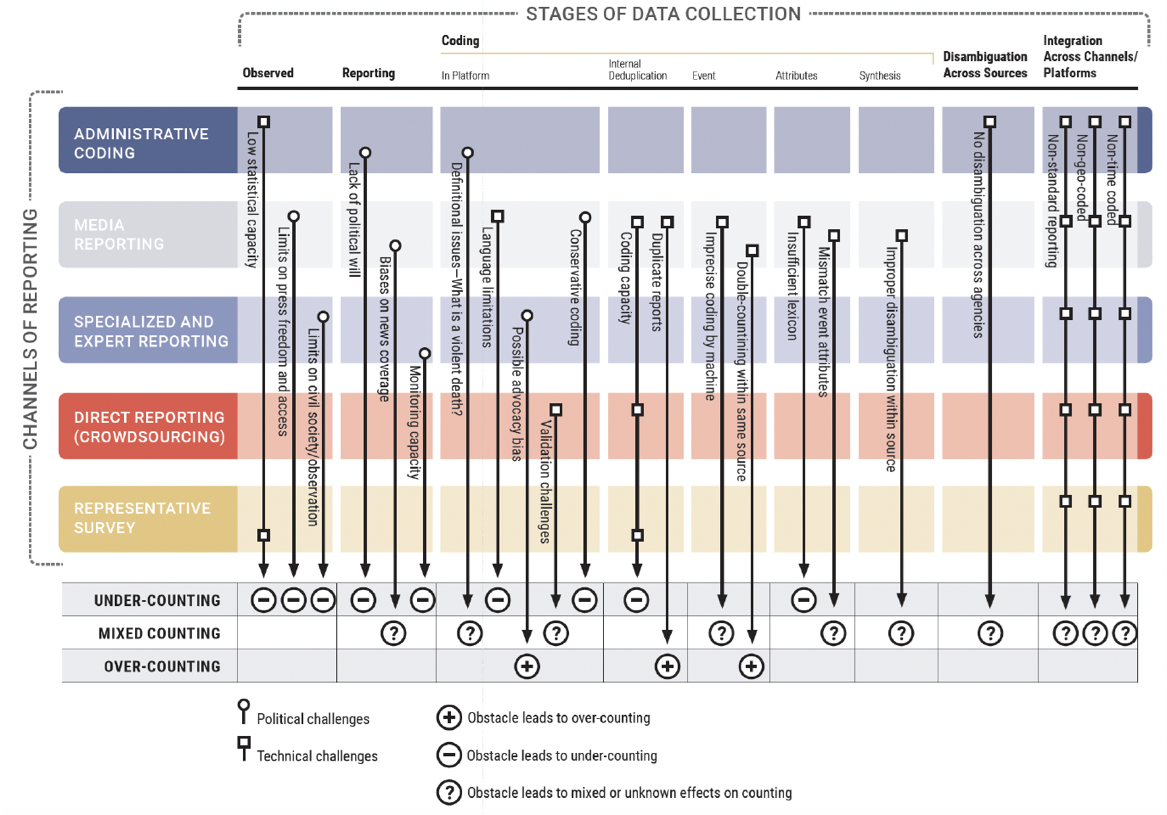
This project develops tools to improve the timeliness, coverage, and comparability of global conflict event data. The Uppsala Conflict Data Program (UCDP) and the Armed Conflict Location & Event Data Project (ACLED) are the two leading efforts that rely on trained human coders to verify, classify, and geolocate violent events from media and secondary sources, providing highly reliable datasets that form the backbone of most academic and policy research on conflict. In contrast, the Global Database of
Events, Language, and Tone (GDELT) is an automated system that processes news streams in real time and updates every five minutes, offering unmatched speed but with less precision and limited uptake in scholarly work.
This project addresses these challenges by: first, mapping the landscape of available datasets; second, extending ACLED-style event typologies across countries and back to 2010; third, developing probabilistic tools to improve the geo-referencing of coarsely located events; and fourth, operationalizing a now-casting pipeline that fuses weekly updates from ACLED and near–real-time GDELT feeds to anticipate forthcoming UCDP releases, thereby narrowing the information lag that constrains real-world decision-making.
Development and communication of forecasts to anticipate food insecurity. World Food Program sprint accelerator
World Food Program
IP: Hannes Mueller
October 2025- December 2026
This project develops a forecasting system for conflict-induced internal displacement, using IDMC subnational data, with the aim of supporting WFP’s Food Security and Nutrition Analysis Service at headquarters. The initiative is driven by the need to anticipate forced mobility crises so that humanitarian teams can better prepare their responses, especially in contexts where displacement and food insecurity are closely interconnected.
The project extension further develops this line of work by refining the predictive models and analysing case studies of large-scale displacement events that could have been anticipated in advance. In addition to improving technical forecasting capacity, the extension focuses on how to combine different forecasts and communicate them in a clear, useful and actionable way. In this way, the project aims not only to produce better estimates, but also to ensure that these reach WFP teams —both at headquarters and in country offices— in formats that support operational and strategic decision-making.
Using conflict and displacement forecasts to anticipate food insecurity
Organisation for Economic Co-operation and Development (OECD)
IP: Christopher Rauh
November 2025- May 2026
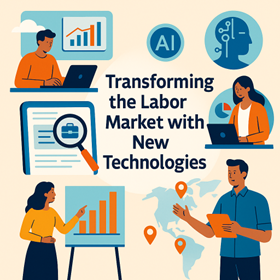
This project explores how new technologies are transforming the world of work. By analyzing millions of job postings and training programs, it identifies which skills are growing in demand, which professions are changing the fastest, and where new opportunities are emerging. The goal is to give governments, companies, and educational institutions a clear, up-to-date picture of how labour markets are evolving. The project also helps match training to real employer needs, ensuring that workers can access the skills that lead to better jobs. By creating easy-to-use tools and practical insights, it supports evidence-based decisions on reskilling, workforce planning, and regional development. Ultimately, the project empowers people, businesses, and policymakers to navigate technological change with confidence.
Bank Competition, Financial Stability, and Monetary Policy Transmission
Bank of Thailand
IP: Hugo Rodríguez
2026
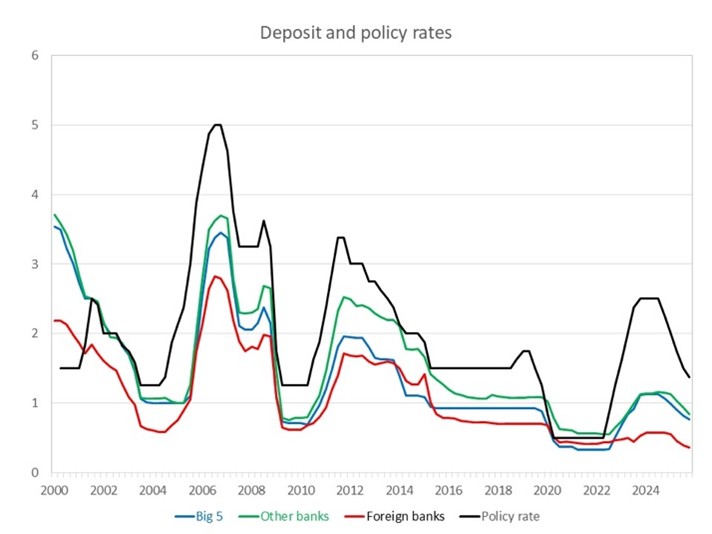
The ultimate goal of the project is to provide a framework suitable to inform policy regarding possible trade-offs associated with how bank competition simultaneously affects the transmission of monetary policy and financial stability. In particular, two objectives of the project are as follows:
- To empirically evaluate how bank competition affects Thailand’s monetary transmission, in particular, its effects on market rates, credit provision in the aggregate and in specific sectors of the Thai economy, such as SMEs.
- To develop a DSGE model of a small open economy calibrated to Thailand's data which includes two fact-based elements, namely, (i) the dynamics of deposit creation and destruction, and (ii) liquidity, credit, and solvency risks being endogenously determined by credit provision.
Multi-Sector Growth Model Project
University of Notre Dame and CEPR
IP: Martí Mestieri
2026
Martí Mestieri, together with Francisco Buera and Joseph Kaboski, is working with economists at the World Bank and the IMF on a project funded by the Building Inclusive Growth (BIG) Lab at the University of Notre Dame, within the CEPR’s Structural Transformation and Economic Growth (STEG) program. The project aims to develop and harmonize economic models to analyze structural transformation, sectoral resource misallocation and future economic scenarios, improving policy diagnostics, forecasting and research.
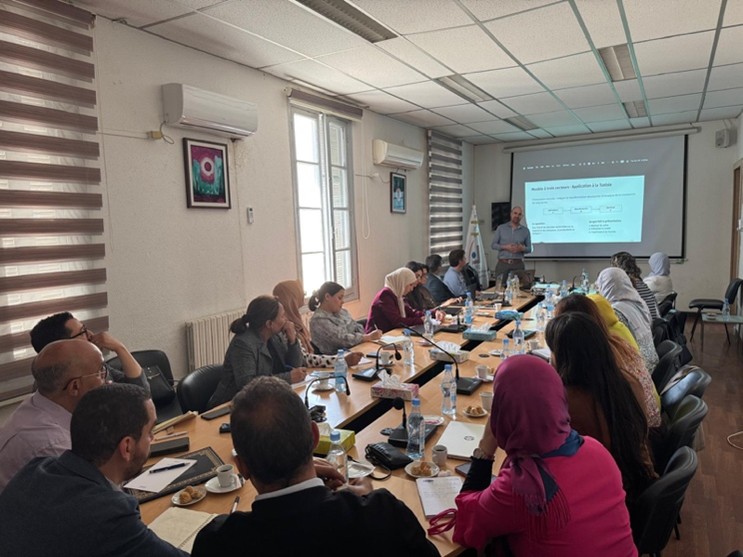
The work combines value-added and gross-output frameworks, aligns assumptions and technical implementation, and generates model-based data comparable to observed statistics. Particular attention is given to deflators and real-to-nominal conversions to enhance empirical accuracy. The resulting models will provide key indicators and sectoral and trade-related metrics for validation, research and policy analysis. As part of the project’s dissemination, Arthur Galego and Martí Mestieri presented the work at the Tunisian Institute of Competitiveness and Quantitative Studies, where they engaged in a productive discussion with participants.
Africa Facility to Support United Nations Development Programme
United Nations Development Program (UNDP)
IP: Hannes Mueller
2026
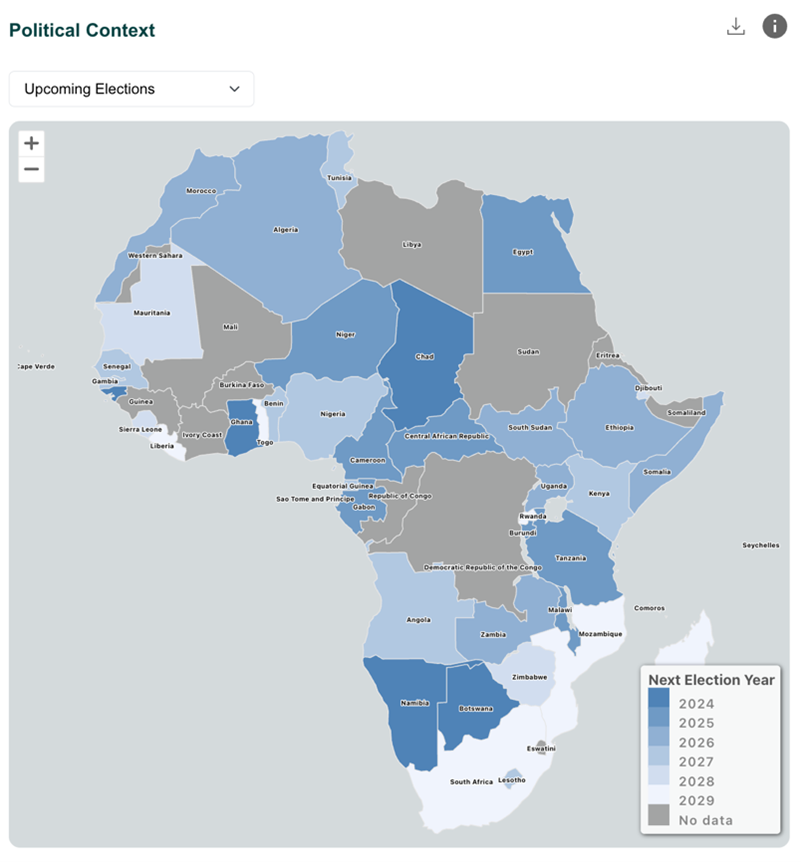
The EconAI group will partner with Democratie Monitor to support the second phase of the Africa Transition Insights (formerly "Index"), which is a UNDP project - funded by the EU and in collaboration with the African Union. The ATI aims to strengthen and operationalize a data-driven system for identifying and acting on political transition opportunities across Africa. The project will first consolidate and upgrade the existing ATI tabular data while also curating relevant text data and providing a comprehensive data codebook to ensure transparency and usability. In parallel, the team will design, build, test, and deploy "ChatATI", an LLM-based interface. Here users can interact with the curated data to answer factual queries and generate graphics and paragraphs for reporting. Throughout the process, EconAI and Democratie Monitor will coordinate stakeholder engagement, including consultations with Regional Economic Communities (RECs) and AU representatives. Overall, the initiative seeks to translate high-quality transition data into actionable, user-oriented tools that support timely and informed decision-making.
Early-warning systems for fragility: institutional disruption and internally dis-placed people
IP: Hannes Mueller
FFO- S05-P-01-German Government
2025-2026
This project aims to create early warning systems to anticipate two dimensions of fragility: institutional disruption and forced displacement. Its objective is to provide better predictions to help governments and humanitarian organizations act before crises worsen. The news corpus has been expanded from 6 million to more than 12 million articles, improving the detection of de-democratization events, such as coups d’état or the weakening of the judiciary. Google Trends data have also been incorporated to improve predictions on forced displacement.
The project has generated collaborations with organizations such as UNHCR, UNICEF, OCHA, WFP, Transparency International, the OAS, UNDP and the IMF. As part of this project, a workshop on “Growing Together: Prediction, Prevention and Preparedness” was organized, bringing together academics, governments, international organizations and NGOs to discuss how to make early warning systems more useful. The workshop’s conclusions have helped guide how to better integrate AI into humanitarian early warning systems. The project will culminate in an improved website and downloadable public data on de-democratization events.
Three working papers have also been produced as part of this project. These papers provide further detail on the research developed and the project’s main academic outputs
- Harnessing AI: How to develop and integrate automated prediction systems for humanitarian anticipatory action (Humanitarian Forecast Working Group, 2024)
- Forecasting Forced Displacement Flows Using Machine Learning with Text Data (Talvi Robledo et al, 2026)
- Semantic Similarity Measures in Newspaper Text for Detecting and Predicting Disruptive Institutional Events (Vassallo et al, 2026)
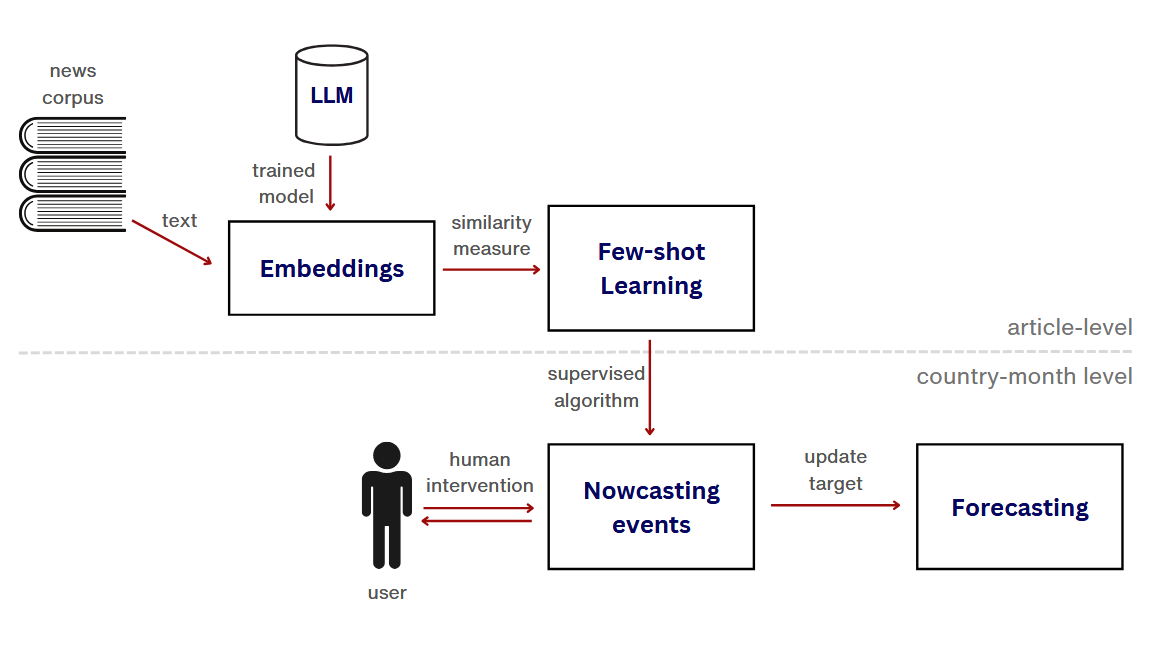
Institutional disruption pipeline architecture
Closing the Maternity Pension Gap? Impact of Maternal Pension Supplements
PI: Cristina Bellés
FUNDACIÓN RAMON ARECES
2025-2027
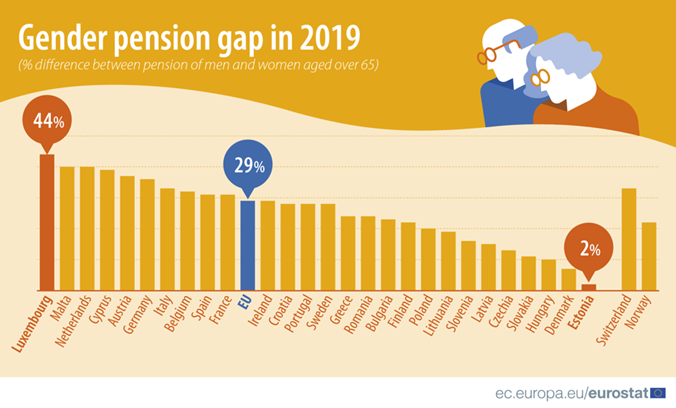
The objective of this project is to analyze the effectiveness of pension supplements in reducing the gender gap, focusing on mothers. Women face a higher risk of poverty in old age due to lower pensions, which result from career interruptions caused by motherhood. In the European Union, the gender pension gap is 29%, while in Spain it reaches 31.3%. In 2016, Spain introduced a pension supplement for mothers with two or more children (5% for two children, 10% for three, and 15% for four or more) to compensate for the impact of childrearing on their careers. This project will evaluate its impact using a difference-in-differences approach, comparing women with two or more children to those with fewer children (or to men), before and after 2016. It will also analyze whether the 2021 reform, which extended the supplement to fathers, has altered the previous effects. This study aims to contribute to the design of public policies that reduce the gender gap in pension systems.
Aggregation and acquisition of information in markets: positive and normative aspects
PI: Jordi Brandts and Xavier Vives
IESE
2021-2027
IESE and the Fundació d’Economia Analítica are collaborating on research into how information is acquired, shared and reflected in markets, and how this affects market outcomes and overall welfare.
In 2024 and 2025, laboratory experiments were conducted at LINEEX, University of Valencia, and LEE, Universitat Jaume I, focusing on a financial market where participants traded an asset with uncertain value. Preliminary findings were presented at several international conferences.
The research has led to the working paper “Communication Islands, Biased Information Sources, and Asset Markets”, by Anna Bayona, Jordi Brandts and Xavier Vives. The paper examines how communication between traders influences the incorporation of information into prices. Results show that communication generally helps prices better reflect the asset’s true value. However, when information sources are biased, communication within separate groups can lead to more accurate prices than open communication among all traders, as it makes the information easier to interpret.
New laboratory experiments are underway to explore these questions further, alongside a separate project on the impact of large language models on trading in financial markets.